
Blog

Myth
Reality
Sugar feeds the tumor → do not give carbohydrates
The body produces its own glucose; the tumor cannot be "starved" through diet
Carbohydrate-free diet is healthier for cancer dogs
Can lead to reduced intake, cachexia and poorer quality of life
All carbohydrates are equal
Complex carbohydrates in a balanced formula are fine; large amounts of simple sugars are less ideal
Nutrition can fight the tumor
Nutrition supports the dog — that's the goal

A cancer diagnosis for your dog is already a heavy blow. And then you hear: "We suggest chemotherapy." For many owners, that word immediately conjures up images of people suffering from treatment, losing their hair, and being bedridden for days. But with dogs, the story is different - and not always as severe as you might fear.

Many owners notice it over time: their dog gets thinner, muscles disappear, weight decreases — even though he still eats reasonably well. This is no coincidence. It has a name: cachexia. And it is one of the most underestimated consequences of cancer in dogs.

After a cancer diagnosis, medical terms are thrown at you left and right. What do words like metastases, cachexia, or remission actually mean? In this overview, we explain the most commonly used terms simply, so you know exactly what the vet is talking about.

One of the first things owners notice after a cancer diagnosis is that their dog's appetite decreases. Discover 10 practical tips to stimulate your dog's appetite and support their quality of life.

During cancer treatment, good and bad days are normal. However, there are signs you should never ignore: not eating or drinking for two days, vomiting or diarrhea, increased pain or restlessness, sudden decreased mobility, behavioral changes, pale mucous membranes, or extreme lethargy. Your intuition also matters.
When in doubt, it's better to contact them one time too many than too late. Early follow-up increases your dog's comfort.

What can a dog with cancer eat? Discover nutritional tips for dogs with cancer and how to support your dog's appetite and quality of life.

With a few small adjustments at home, you can make your dog with cancer more comfortable. Think of a soft, warm resting place, non-slip surfaces, food and water nearby, warmth for painful joints, and a calm routine. Short, adapted walks and extra closeness often provide your dog with the most stability and comfort.

Omega-3 fatty acids, such as EPA and DHA from fish oil, can support dogs with cancer. They help reduce inflammation, combat muscle loss, and regulate the immune system. While not a miracle cure, omega-3s offer scientifically proven benefits for the condition and well-being of dogs during illness.


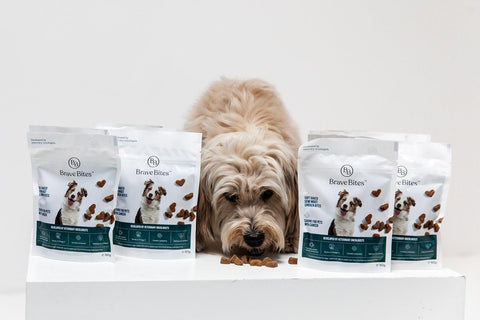




BraveBites® – Nutritious Snack for Dogs with Cancer
€25,99
Available in
€25,99
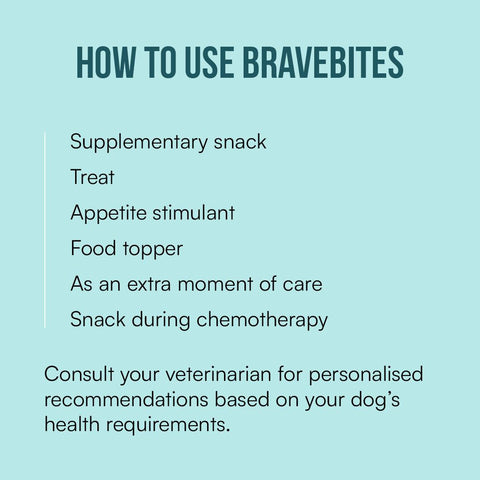
BraveBites® are healthy dog snacks enriched with supplements, specially developed for dogs with cancer. These nutritious treats stimulate appetite and contain ingredients tailored to the specific needs of these dogs. Developed with veterinary expertise, BraveBites® provides loving support to improve your dog's quality of life and well-being. With BraveBites®, you can pamper your loyal companion during their fight against cancer and provide the care they deserve.
Learn more about the scientific background of BraveBites® and discover how it can support your dog.
Read here how BraveBites® supports veterinary cancer research. With every bag sold, you help us fight cancer in animals.


